

Elvira Sashova is from Lom. She graduated from the American University in Bulgaria with a degree in Journalism and Mass Communication with minors in Psychology and Film and Theatre. Our conversation with her is part of a series of interviews highlighting stories of change among Roma youth who are supported by the Trust for Social Achievement (TSA) to study and successfully graduate from the American University in Bulgaria (AUBG).
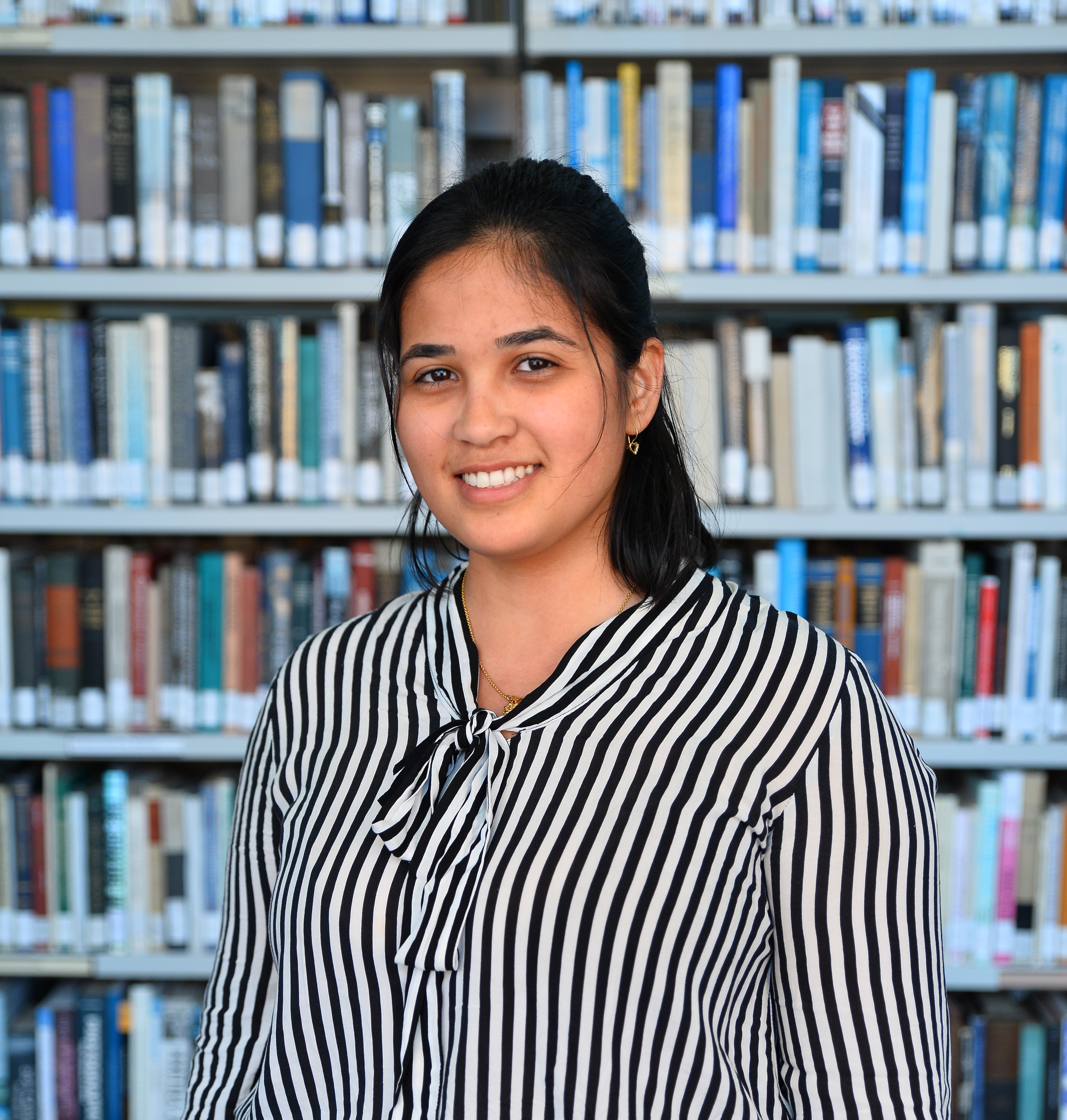
Elvira Sashova is...?
I would like to be introduced as: "Elvira Sashova is an activist who fights for change and supports young people in pursuing their dreams."
What kind of change is Elvira Sashova fighting for? What does “change” mean to you?
Right now, change means encouraging young people to take action. I would very much like to engage them in fighting for what they believe in and working together and supporting each other. That's how I see change.
What were your teenage years and school life like? How would you describe yourself back then?
Nothing out of the ordinary. I grew up in a small town. I'm from a small neighborhood. I have a brother, a sister, a large family, a house. My school years were mostly spent studying. I intensely focused on education and getting good grades. I did some extracurricular activities, mostly choir and singing, because I love music. That's it in a nutshell.
You grew up in a Roma neighborhood and say you had a completely normal childhood. What do you mean by a “normal” childhood?
Many people have a stereotypical idea of how Roma children grow up. My idea of normal is: I have parents, I have a roof over my head, I have food, I have an education. That's my idea of a “normal” childhood. My mom and dad worked several jobs. Sometimes Mom stayed home to take care of us when we were younger; later she started working in different factories. They worked wherever they could, whenever they could. We also have a large garden and raise animals. Some things are privileges—like having a garden and animals.
It's interesting that you see that as a privilege, and not as extra work!
It's hard. Life in general is hard. But having a place of your own and home-grown food, knowing that you don't need to go out and buy it — to me, that's a privilege.
Who was your inspiration in your childhood? Who did you want to be like?
It might sound a little sentimental or cliche, but as the youngest child, I really looked up to my older sister. She was my role model. She inspired me to value education. My parents helped too, clarifying my ideas about what I should and shouldn't pursue. But my sister went through a lot – applying to university, paying for her education, graduating, and starting to work all on her own. I can confidently say that I wanted to be like her. I admired how she stayed true to her principles, how she stood up for herself, how she helped others... but that comes from my whole family. I don't know if it's like this in every Roma family, but this idea of sticking together as a family and supporting each other is something I witnessed from a young age.
What language did you speak at home growing up?
Both Romanes and Bulgarian. Unfortunately, I didn't learn our language, Romanes, very well because my parents insisted that I learn Bulgarian so that I could do well in school. From then on, I got into the habit of speaking Bulgarian. I consider both languages to be important and valuable.
What were your dreams in high school? What did you want to achieve?
In school, I was initially drawn to music and imagined myself on a big stage. Then I became interested in literature—I've always loved to read and read a lot as a child. My dream was to be a writer, to withdraw from the world a bit and write. To convey my knowledge and worldview. And when I was graduating school, I thought about directing or psychology. I’ve always aimed to help others, and to be useful. Even in writing, my aim was to share what I know to support others. As a psychologist, I would like to understand people's problems and help guide them. At university, I initially wanted to study psychology, but it wasn't an option. So, I chose journalism instead because I found it interesting. My activism began then – I started thinking about how I could help people in a different way, by informing them, helping distinguish between fact and opinion.
How did you decide on AUBG and studying in English?
When I was in school, I chose to be in the entrepreneurship program with intensive English. That's how I got into English. My interest in AUBG itself was sparked by a Facebook post that my sister sent me about TOEFL training at AUBG in the summer of 2019. TSA was offering two scholarships. And I said to myself, "Oh, I haven't seen this university! It looks cool, why not give it a try?" I applied and they accepted me. I got a high score on the TOEFL—577 points. The rest is history.
How did your parents and loved ones react to the news? Was this basically your first step toward the American University?
There were mixed emotions. On one hand, there was pride in my achievement; on the other, there was concern: "Our child wants to study at such a prestigious university, how can we afford it? How can we continue from here?” Mixed feelings — of concern and pride.
How would you describe your time at AUBG – your admission, your studies, life on campus?
When you grow in a small town, used to being in a familiar environment, and you go to a totally different place – even if it is university – you encounter various, very personal perspectives. This isn’t limited to the students there, I am talking about professors and the people who work there. So, I would describe my admission and education here as a turning point in my life. I started getting involved in various projects, learning about the NGO sector inside and out, and being inspired by the people who work in their field with strong personal and professional goals.
You and your fellow students implemented interesting initiatives during your time there. What were they, and how did you become a volunteer?
There were quite a few initiatives. Some of them last for several days. At one of the career development workshops, I helped include a young man from the local Roma neighborhood (in Blagoevgrad). I also volunteered at a kindergarten and a family-type accommodation center. When people see that you are eager, they give you guidance. That's what I like about the university—even if it's something very simple, you can ask and receive support. If they see that you are motivated, they will give you the opportunity to fulfil any idea. The dean's assistant noticed our ambition and suggested that we volunteer at both places. Together with Tsveti (you can read the conversation with her on our website — "Tsveti Ilieva: Maturity Means Overcoming the ‘Roma’ Stigma”"), we said, “Let’s do it, why not?” We volunteered there for a whole semester, several times a week at both places. It was interesting to get to know life and young people at the family-type accommodation center. It was very important to me because I saw a lot of strength in the young people themselves.
What does AUBG offer its students? How does it change the lives of its students compared to Bulgarian universities?
Commitment, support, and focus. Also, attention and time. When there are fewer students and you have such a responsive team at the university—I'm not just talking about professors, but all the staff—everyone can give guidance and support you in different areas. Everyone who asked, received. Even the level of education is different. When you're in a small classroom, the professor can provide you with individual attention. It’s easier to speak personally with professors. When there are about 200 people in a class, it’s totally different. Here, there is the opportunity for selectivity, but also for focus. They offer you great resources to initiate projects, to get involved with the city, and even the country. You have a lot of resources to develop your potential.
How does living on an international campus add to education?
It changes your perspective. You learn about different cultures, history, and ways of life. It makes you a little more open-minded. You are less prejudiced and influenced by stereotypes. That was my personal experience. When you travel to the countries and communities of international students, it’s different than visiting those places otherwise. You know people from there, you’ve studied with them, and you’ve had different experiences with them.
What was the biggest difficulty or “unknown” before and during your studies?
Before, the biggest challenge was deciding exactly what I wanted and where to study. Initially, I wanted to take a year off to think about it. But my parents disagreed — "If you give up now, you'll lose your motivation." Then it was a matter of how to afford it.
Were there any moments that made you doubt yourself and say, "That's it! I want to do this, but it's not going to happen..."?
The moment when I didn’t receive a full scholarship from TSA – only one semester was covered. I thought, "Okay, this has been nice, I tried it out, but where do I go from here?" But I persevered. There are moments of weakness when you compare yourself to others... and you ask yourself, "Do I deserve to be in this place, am I good enough?" I do this especially when I get a bad grade. But these moments build character. After you fall, you have to be able to get up and keep going.
What should a prospective AUBG student know?
Everyone is always willing to help you. It's important to start building relationships from the very beginning. Don't be afraid to talk to people and get to know them. Don't overcommit to clubs, because it can undermine your success a little. Make a schedule for your courses. Keep track of everything so that you don't end up having to take extra credits. The whole credit system is very different from other universities and can be confusing. It may seem scary at first, but people will always help and explain things to you. All you have to do is ask. Sometimes even if you don't ask – you get used to it fairly quickly. Take advantage of all the opportunities the environment has to offer.
And they should dare to apply, right? Because many young people are afraid to do so.
Definitely. I always tell every prospective young person that I know is about to apply – it's a great opportunity and they should give it a try. Some worry about the language, some about finances, which is understandable. But I tell them: there's always a way. I know students who took out a loan, worked over the summer, and then paid it off. Students with straight A's get preferential treatment. There are options. It's important for everyone to give it a try.
You've said you wanted to be a psychologist. Why? What attracted you to the field?
I find people interesting. On the one hand, I wanted to understand more about how different people think. On the other hand, I wanted to help different people. I want to be someone who can help and guide people in the right direction, support them, or motivate them.
How do you see yourself now? With an office—a psychologist?
Right now, I've shifted my perspective. I don't see myself as a psychologist anymore. I don't even see myself in an office. I see myself more as someone who works on or organizes different projects, not staying in one place. Someone who travels and helps in different areas.
What are your current project goals?
They are mainly related to our (Roma) community, but I am open to working with other minorities. Right now, I am supporting a group of people who grew up in institutions. I am making podcasts and sharing their stories – it’s a kind of informational prevention. I don't see myself operating in a specific field. But my goal is really, wherever I am, to have the opportunity to work on projects. And to have the opportunity to travel and meet new people.
What are the main challenges in the areas you want to work in? What are the main problems, and what solutions can you offer?
One challenge in my work with young people is keeping them motivated – how to make them resilient and prevent them from giving up too easily.
This is interesting – many people say that young people are not committed enough, not motivated enough. Do you haven solutions in mind? How do you think this can be changed? Is this even true?
When it comes to young people, I would say that they need more attention and more time. Not time for theories and dry material, but time to actually go out and see how things are done, to experience them. They need to get involved, to be where the action is. Young people are curious and always want to see, hear, and try things. At first, they may say they don't want to, but in fact they do. That's my job right now—Student Leadership and Engagement Coordinator. I don't have a clear plan yet on how to make this happen, but I hope to have one soon. It's a process, after all.
What are you doing at the moment? What are you involved in?
I am currently a fellow of the President of AUBG. It's a kind of one-year research internship. I'm part of a new program called the Student Leadership and Engagement Office. In essence, I’m an advisor and consultant to students in different areas—from financing and documentation to advice and developing different projects, workshops, seminars, and so on. I see many motivated young people and want to help them in any way I can, with whatever they need. I also want to challenge them a little, get them to step outside the bubble of the university. I have spoken with the municipality, various mediators, and non-governmental organizations. There should be opportunities to implement projects outside the university. Students should be able to build relationships not only with the people on campus but obtain experience with people in the field.
What do you say to young people and students?
Fight for what you believe in, because nothing is impossible. If your desire is strong enough, there is always a way.
The interview was conducted by Ognyan Isaev, Program Director at the Trust for Social Achievement. From the beginning of the 2015/2016 academic year to the current 2024/2025 academic year, the Trust for Social Achievement has supported 16 young people of Roma origin who have been accepted to the American University in Bulgaria. Nine of them have successfully graduated. Some of them are continuing their education in master's programs, while others are already successfully pursuing careers in Bulgarian or foreign companies.
If you would like to support more Roma youth in fulfilling their dream of studying at the American University in Bulgaria, you can donate HERE: https://socialachievement.org/en/a-scholarship-today-a-bright-future-tomorrow/